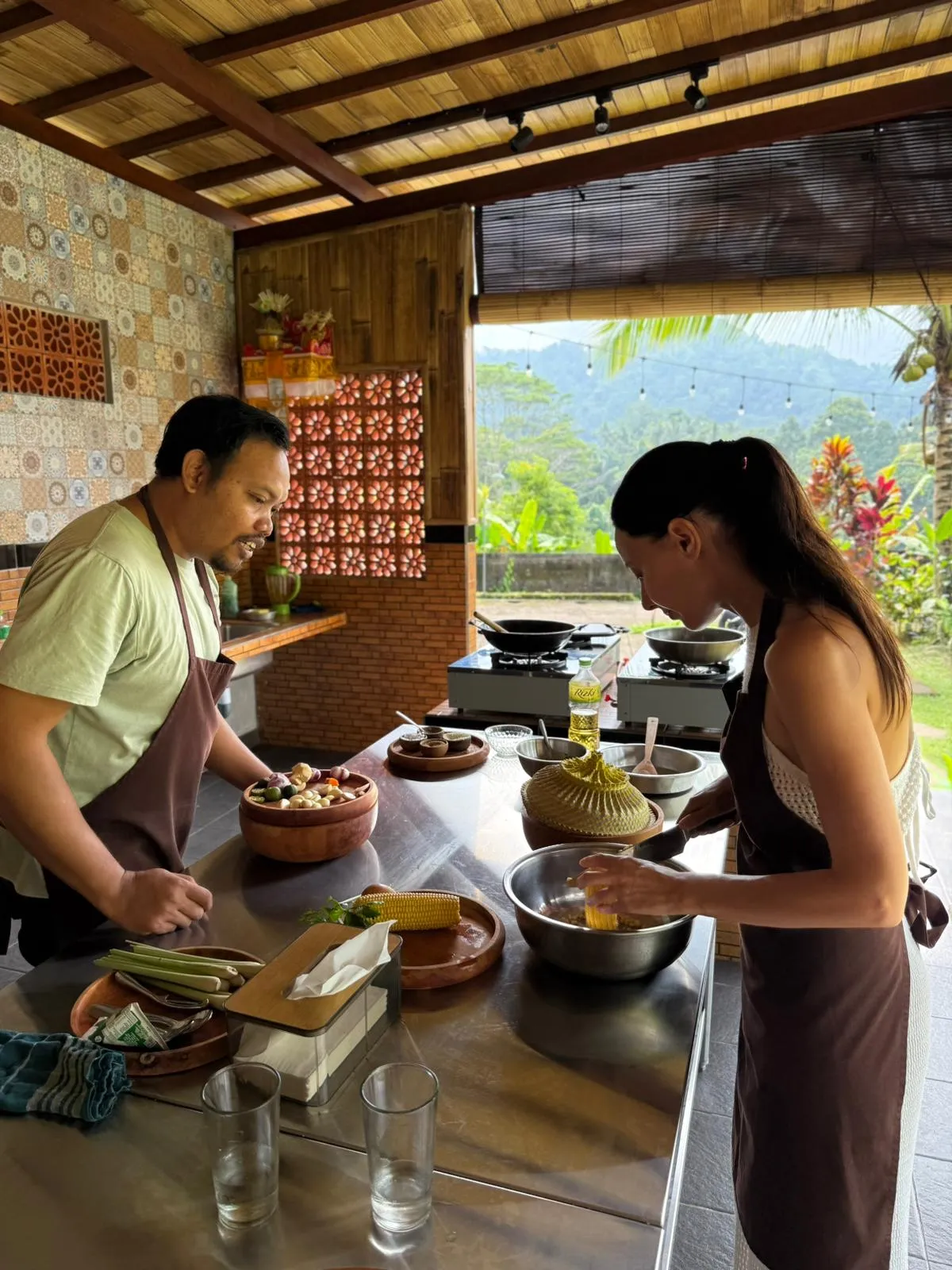
If you have ever eaten at a Balinese warung and wondered why the food tastes so layered, so fragrant, so quietly complicated, the answer usually starts in a stone mortar. It is called base genep, and in our kitchen in Sidemen it is the very first thing we teach.
We get asked about it constantly, usually halfway through the first class when someone looks up from the mortar and says, “Wait, so everything starts with this?” Pretty much, yes. So here is the long answer, the way we would tell it at the table.
What “genep” actually means
In Balinese, genep means complete. Base (said like “bah-seh”) is the word for a spice paste. Put them together and you get a paste that is meant to be whole: a full set of aromatics, roots, heat and spice, all pounded into one thing instead of being added to the pan one at a time.
That is the idea that makes Balinese cooking feel different from a lot of home cooking elsewhere. You do not build flavour in the wok. You build it first, in the mortar, and the wok simply wakes it up.
What goes into it
There is no single official recipe. Every family has its own balance, and the mix shifts depending on whether it is going into a soup, a grilled dish or a slow stew. Still, the cast of characters is fairly familiar, and you will recognise most of them from a market stall:
- Shallots and garlic, the sweet, savoury backbone of almost every paste.
- Ginger, galangal and kencur, three different kinds of roots, each with its own sharpness and perfume.
- Turmeric, for earthiness and that deep golden colour.
- Fresh chilies, for heat, adjusted to how brave the table is feeling.
- Candlenut, pounded in to thicken the paste and give it body.
- Coriander seed and black pepper, dry spices that add warmth and a little citrus edge.
- Shrimp paste and salt, the quiet depth that makes everything taste finished.
Some cooks add lemongrass, lime leaf or a little nutmeg. Others keep it simpler. Treat any list, ours included, as a starting point rather than a rulebook.
“You do not build flavour in the wok. You build it first, in the mortar, and the wok simply wakes it up.”
Why we still grind by hand
Yes, a blender can make a paste. Plenty of households use one on a busy weekday, and nobody is judging. But there is a reason we hand every guest a heavy stone mortar and a pestle on day one.
Grinding is slow enough to teach you things. You notice how the shallots go from crunchy to glossy, how the smell shifts when the turmeric breaks down, how the candlenut turns the whole thing creamy. By the time the paste is smooth, you know what it should look and smell like, and that is a skill no recipe card can give you.
It is also just a good way to start a class
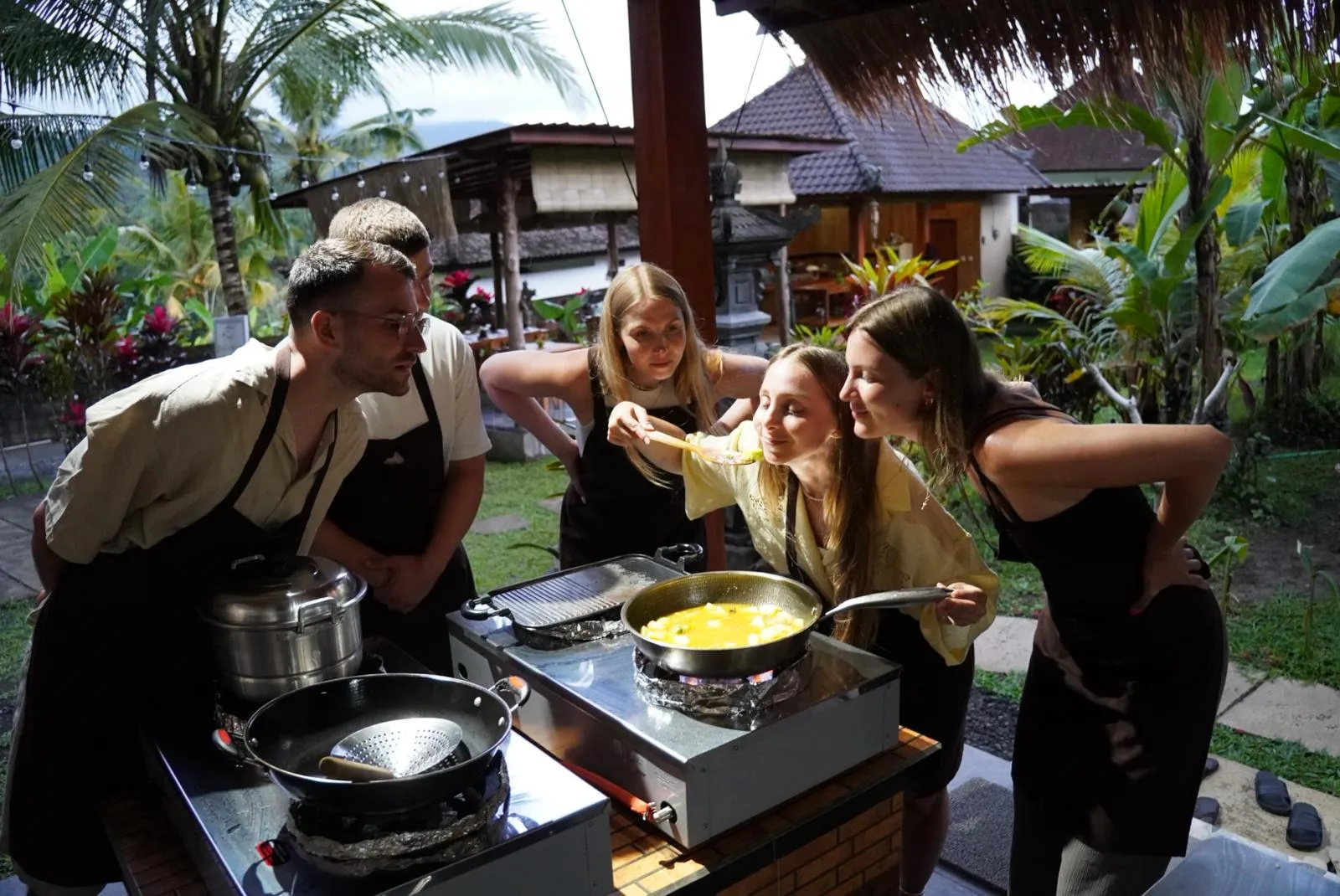
People arrive a bit shy. Ten minutes into pounding spices side by side, everyone is talking, comparing textures and laughing at whoever got chili on their thumb. It is hard to stay formal with a pestle in your hand.
How it shows up on the plate
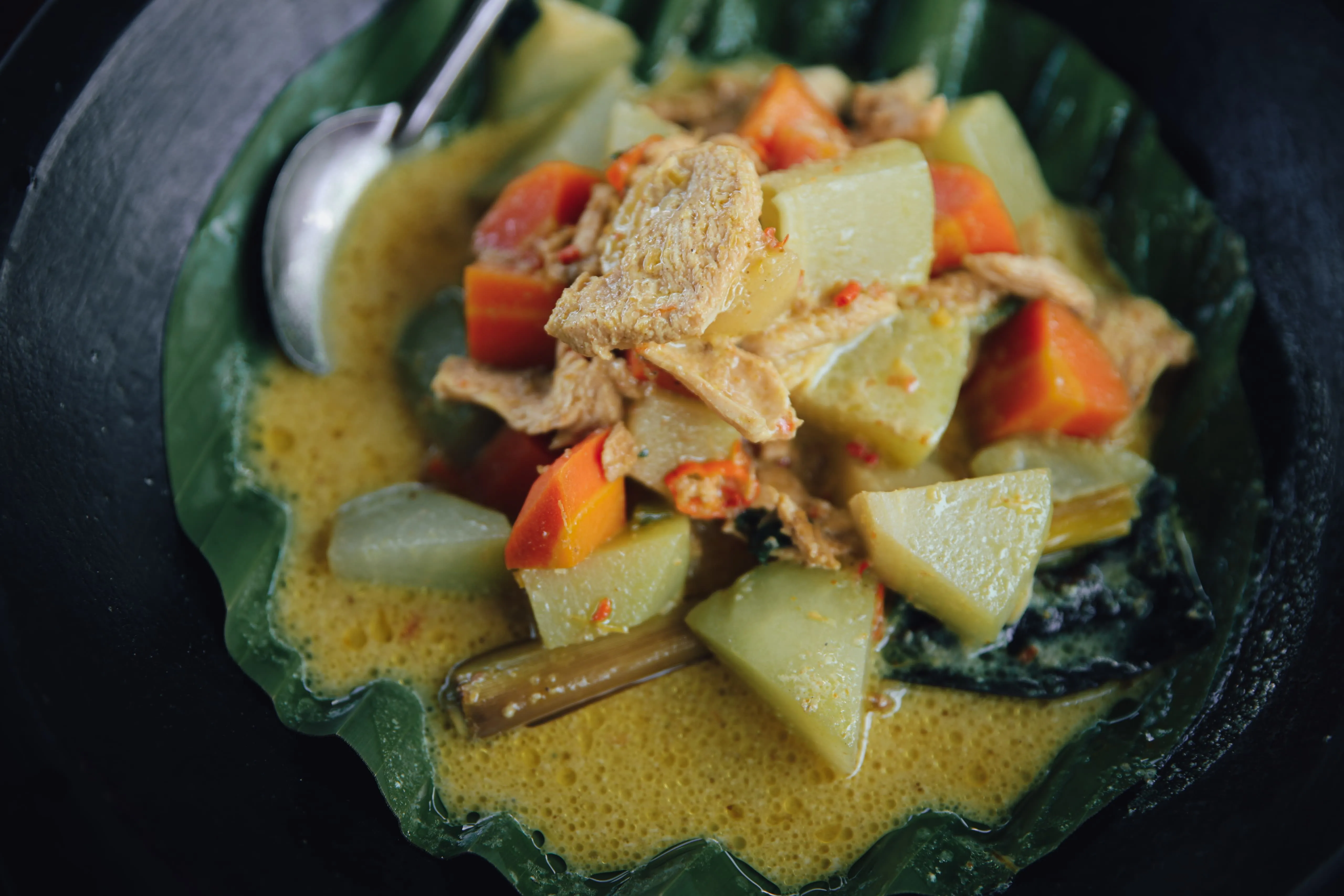
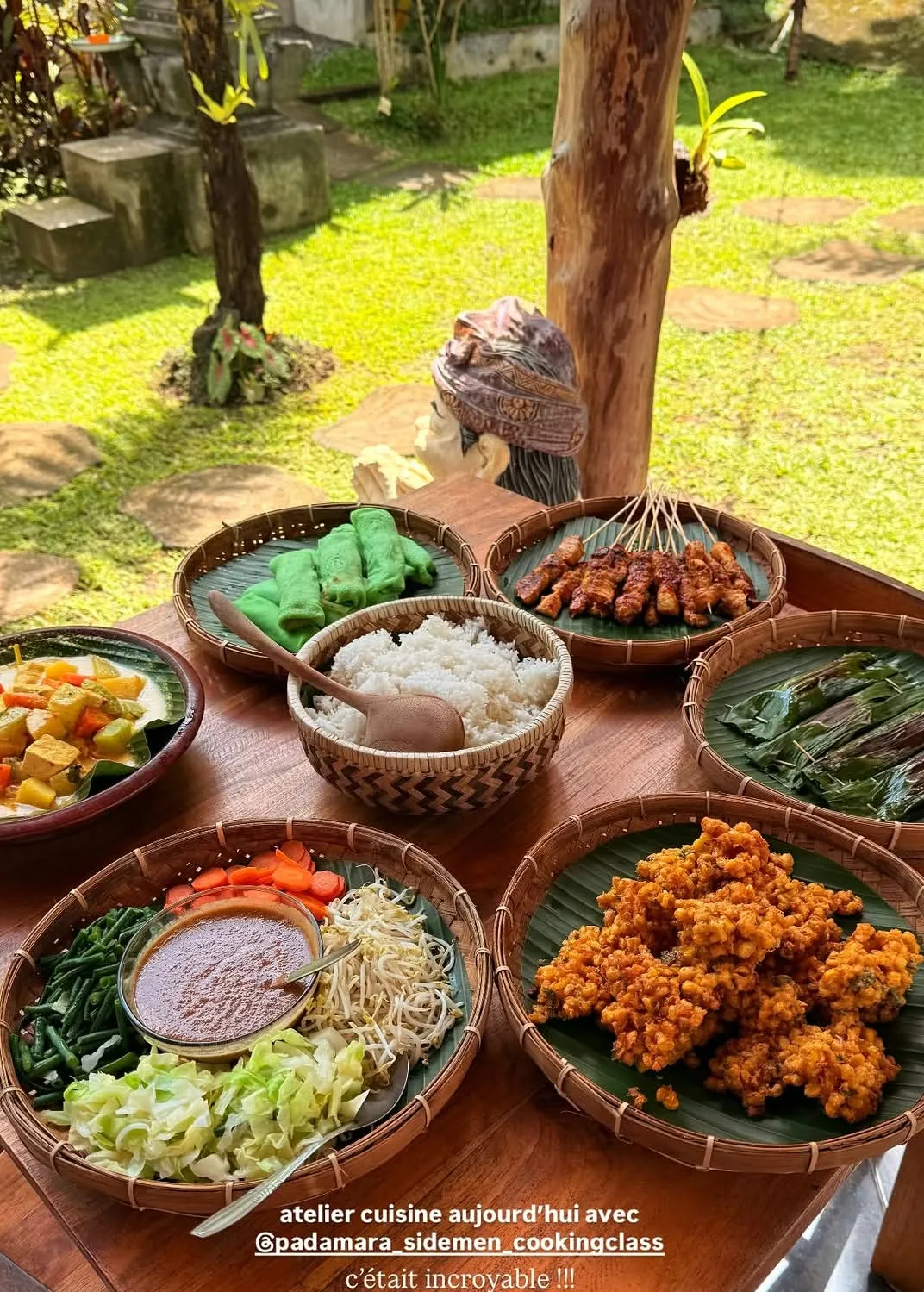
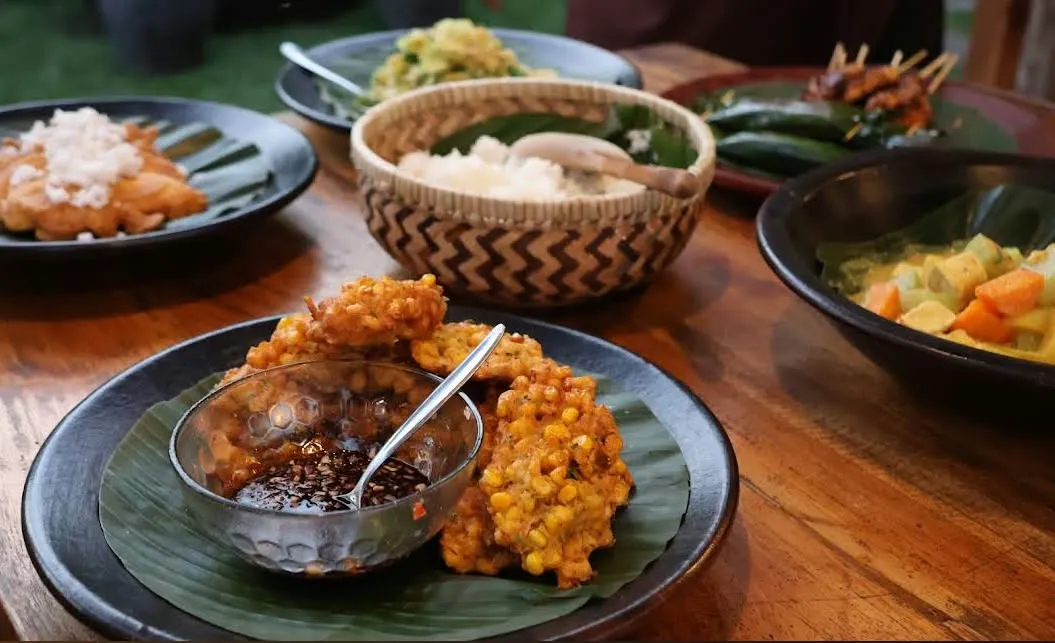
Once you have a good base genep, a surprising number of dishes open up. It can be the foundation of a rich stew, the seasoning for minced fish or chicken before grilling, or the start of a vegetable dish that tastes far bigger than the ingredient list suggests. In class you use yours to cook five to six traditional Balinese or Indonesian dishes, with a dessert at the end, then sit down and eat everything together.
Making your own at home: a few honest tips
Once you are back in your own kitchen, here is what we would tell a friend:
- Start with fresh ingredients. Old roots and tired shallots show up in the taste right away.
- Taste as you go. Balance matters more than exact quantities, so adjust heat and salt gradually.
- Cook the paste gently. Give it time in the pan until it smells fragrant and rounded, not raw.
- Make extra. Divide leftover paste into small portions and keep it cold or frozen for a quick dinner later.
Learning it with us
Our cooking classes run twice a day, at 10.30am for lunch and 5pm for dinner, and last about two hours. They are fully hands-on and suit complete beginners as much as experienced cooks. The ingredients come from our own garden and from farmers nearby, and your chef speaks French and English, so no one has to guess at a step.
If you would like to try it yourself, we would love to have you at the mortar. Choose a private class for two or more, or a group class from four, and send us a message to pick a day.